
In brief
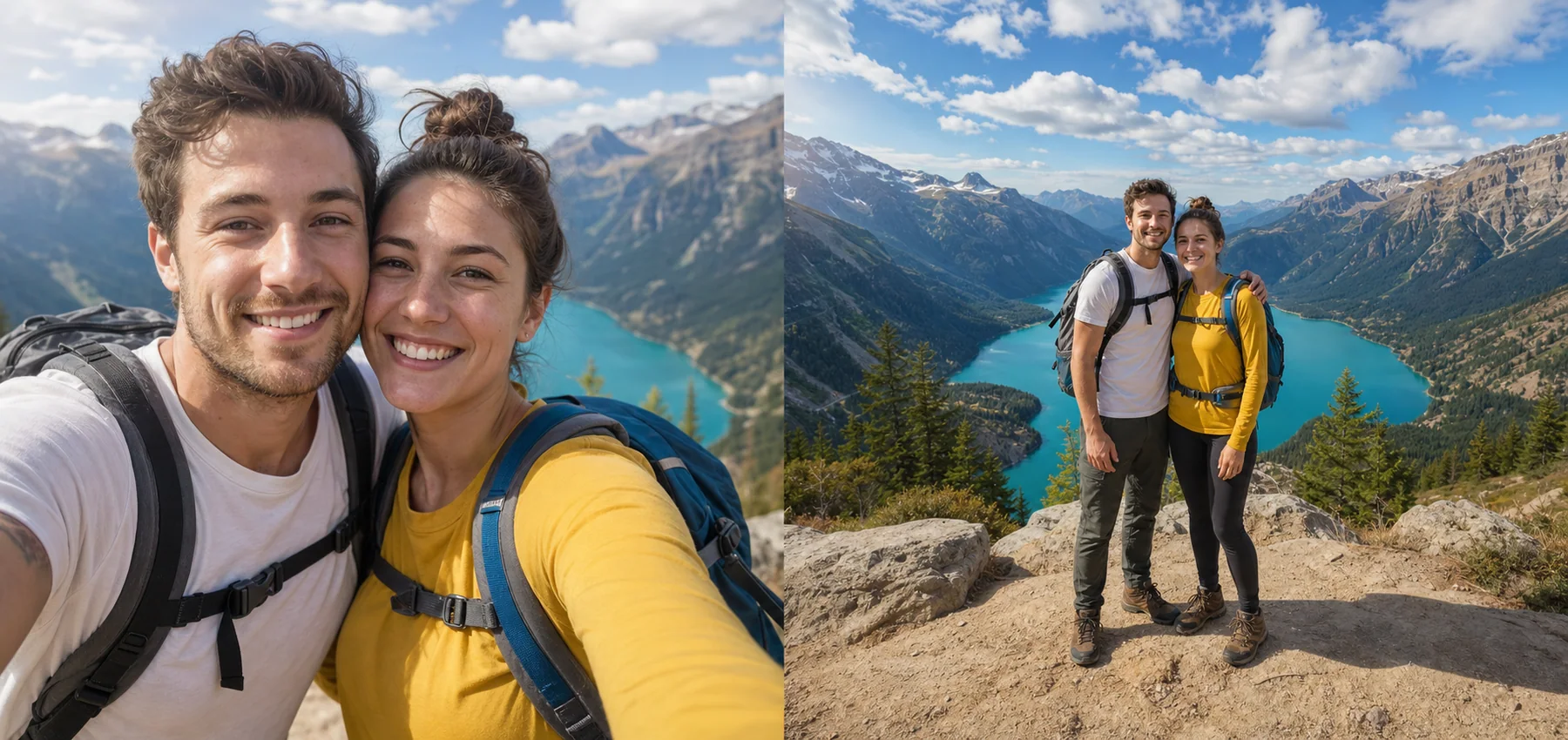
A phone selfie is immediate and personal. A scenic photo point solves a different problem: showing the visitor, group and destination together without sacrificing the view.
What a phone selfie does well
The phone is always available, familiar and ideal for close portraits. It works when the person is the main subject and the background is secondary.
Its limitation appears when the reason for taking the picture is the place itself. Arm length, lens choice and the need to see the screen restrict the composition.
What changes with a scenic photo point
A fixed viewpoint allows the full landscape, facade, attraction or group to remain visible. Everyone can be in the frame and no visitor has to step away to take the picture.
Because the composition is planned in advance, different visitors receive a consistent result that clearly identifies the location.
Branding without interrupting the moment
A finished photo can carry an approved logo, place name or campaign message. The visual identity is applied consistently and does not require the visitor to edit the image.
Branding should support the photograph rather than cover the people or view. Clear margins and templates for horizontal and vertical formats make that possible.
The practical decision
A scenic point does not replace phone photography. It adds a format the visitor cannot easily create alone. The most convincing assessment is a before-and-after test using the same people, light and destination.